4 shark bites in 48 hours: how what we do on land may shape shark behaviour
Recent shark attacks may be linked less to shark behaviour – and more to the pollutants, pesticides and parasites humans send into the ocean.
Shokoofeh Shamsi, Professor in Veterinary Parasitology, Charles Sturt University
21 January 2026
Beachgoers in Australia are on high alert following four shark incidents in New South Wales in 48 hours.
On Tuesday morning, a surfer was bitten by a shark at Point Plumer, on the state’s mid-north coast. He was taken to hospital with minor injuries to one of his legs.
This came after a man was bitten by a shark on Monday evening, while surfing at Manly, on Sydney’s northern beaches. He suffered major wounds to his leg and was rushed to Royal North Shore hospital in a critical condition.
Only a few hours earlier, a shark knocked an 11-year-old boy into the water at Dee Why – just north of Manly – and bit a chunk out of his surfboard. And on Sunday afternoon, a 12-year-old boy was bitten by what authorities believe was a bull shark while swimming at a popular beach in Sydney Harbour. He is still in a critical condition in hospital.
It can be tempting to blame these incidents on sharks alone. But there’s emerging evidence the pollutants, pesticides and parasites we send into the ocean from land could shape not just where and when sharks and people cross paths – but also shark behaviour.
Recognising this bigger picture helps shift the focus from blaming sharks to addressing human impacts, supporting smarter policies that protect both public safety and ocean health.
When shark attacks occur, the pain is real and profound. People are injured, families are shattered, and lives are changed forever. No discussion about ecology should ever minimise the human cost. Fear and anger in these moments are entirely understandable.
Yet public debate often moves quickly from grief to blame, with sharks portrayed as the problem to be removed.
This framing offers a sense of control. But it can also obscure a deeper reality: we still know surprisingly little about the many pressures shaping shark health and behaviour.
What happens on land doesn’t stay on land. When heavy rain washes into the ocean, it doesn’t just carry pollutants and microorganisms with it. It also changes the water itself. Salinity shifts, visibility drops, oxygen levels change and temperatures can fluctuate.
Think about how unsettled you would feel if the air you breathe, the water you drink and the streets you walk suddenly changed overnight. Marine animals experience similar disruption.
Heavy rainfall and heightened risk
The four recent shark incidents in New South Wales followed an intense rainstorm that flushed runoff from land into the state’s coastal waters, reducing visibility and carrying pollution and waste into the sea.
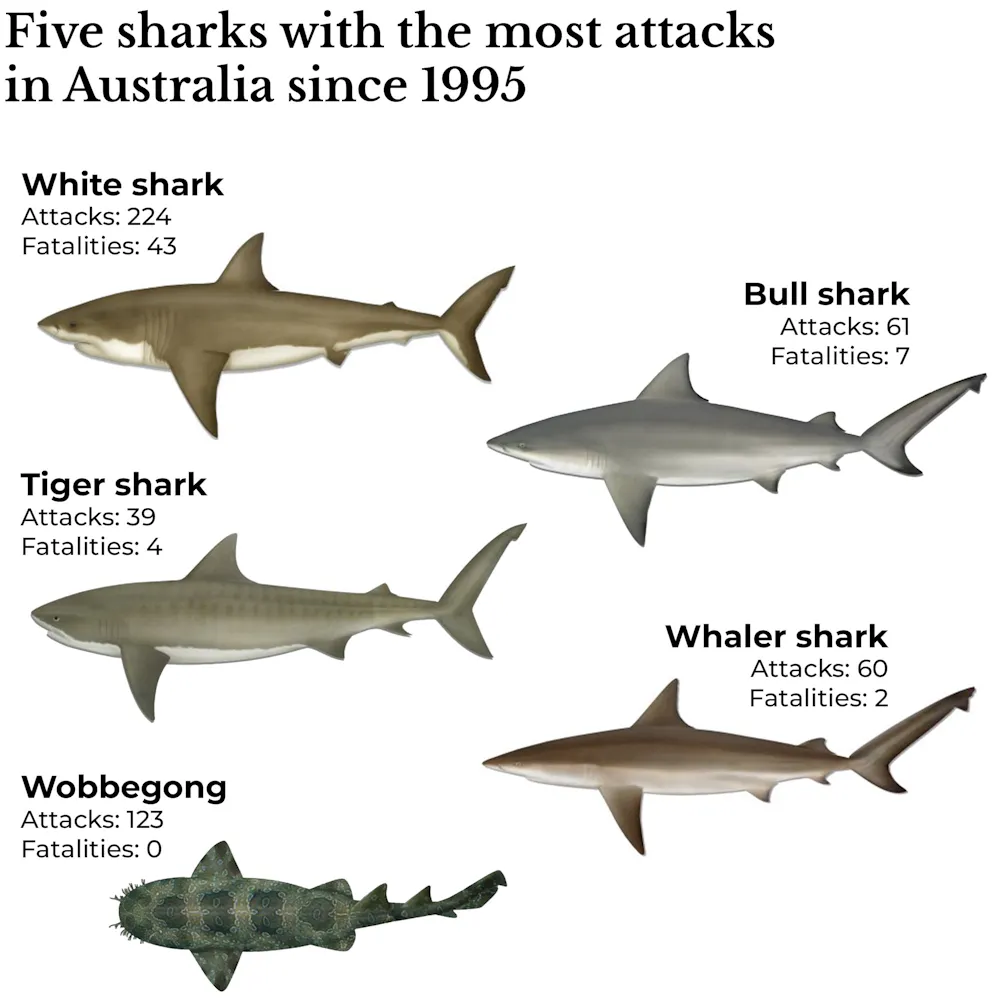
A 2019 study found tiger and white sharks are more likely to attack after heavy rainfall.
This is partly because heavy rainfall flushes out more nutrients to sea, which leads to higher fish populations near the shore. In turn, this attracts sharks.
Heavy rainfall also creates a very turbid, silty environment. Runoff-driven changes in water quality can disrupt the sensory cues sharks rely on, potentially increasing stress and altering behaviour, while reduced visibility also limits people’s ability to assess risk.
Pollutants and parasites
On land, scientists have long recognised that environmental pollutants can interfere with how the nervous system works.
For example, exposure to certain pesticides is linked to neurological diseases in people, such as Parkinson’s disease, because these chemicals can disrupt nerve cell function, energy production and brain signalling pathways.
Emerging research shows similar processes occur in animals. For example, experiments in laboratory rats exposed to a common chemical used in pesticides displayed significant long-term deficits in mood, anxiety, depression and aggressive traits. While these findings don’t automatically translate to wildlife in the ocean, they help explain how chemicals can affect the brain.
There’s also growing evidence that pollutants and pharmaceutical contaminants can alter swimming behaviour, aggression, memory and stress responses in freshwater fish such as Nile tilapia and zebrafish.
Although we know far less about these effects in marine species, the pattern is clear: chemicals entering aquatic environments can influence animal behaviour.
Pollution isn’t the only thing moving from land into the ocean. Microorganisms do too. One of the most striking examples is Toxoplasma gondii, a microscopic parasite best known for infecting humans and domestic animals. On land, it’s shed by cat faeces, and its hardy eggs can survive for months in soil and water.
Research shows these parasite stages can be washed into rivers, estuaries and coastal waters, where they’re taken up by fish and other marine animals. Toxoplasma has been detected in species ranging from fish to dolphins and sea otters.
What makes this parasite particularly important is its ability to influence behaviour. In studies on land, toxoplasma infection has been shown to reduce fear responses, increase risk-taking and alter how the brain processes threats.
Emerging evidence suggests similar effects may occur in marine animals, with potential consequences for predator–prey interactions and ecosystem balance.
Toxoplasma has not yet been reported in sharks, largely because sharks are rarely examined for this parasite.
This gap reflects limited investigation, rather than clear evidence that sharks are unaffected. This doesn’t mean parasites cause shark incidents. But it does highlight how microorganisms originating on land can enter the ocean and influence animal health and behaviour in subtle ways we are only beginning to understand.
Long-term solutions lie upstream
One practical step to reduce the risk of shark attacks is clearer public guidance around swimming after major rain or similar events, when water quality and visibility change rapidly.
Temporary beach closures and consistent warnings following heavy rainfall are low-cost, evidence-based measures that reduce risk without targeting wildlife.
Longer-term solutions lie upstream – in policy and research.
Investment in stormwater management, wastewater infrastructure and runoff reduction helps stabilise coastal conditions and improve ocean health. It can also help reduce biological pressures by limiting parasite exposure.
There is also a clear need to invest in research in areas that remain poorly studied. Even major research efforts on iconic species such as great white sharks have tended to focus on movement and behaviour, while largely overlooking parasites and disease.
Shokoofeh Shamsi receives funding from from various government and research organisations for work in parasitology and environmental health. She is Editor-in-Chief of the journal Marine and Freshwater Research and the Director of the Food Safety Information Council of Australia, a not-for-profit organisation focused on evidence-based food safety communication.
This article is republished from The Conversation under a Creative Commons license.
RUGBY Former All Black Tony Brown has confirmed he intends to honour his contract as an assistant with South Africa, rather than make himself available for inclusion in any New Zealand coaching group More...
BUSINESS A wet spring and early summer is good news for the energy market - for 2026 More...